


A Necessary Reform or a Step Backwards?
By Dr Sayantani Roy Choudhury, Associate Professor, Praxis Business School
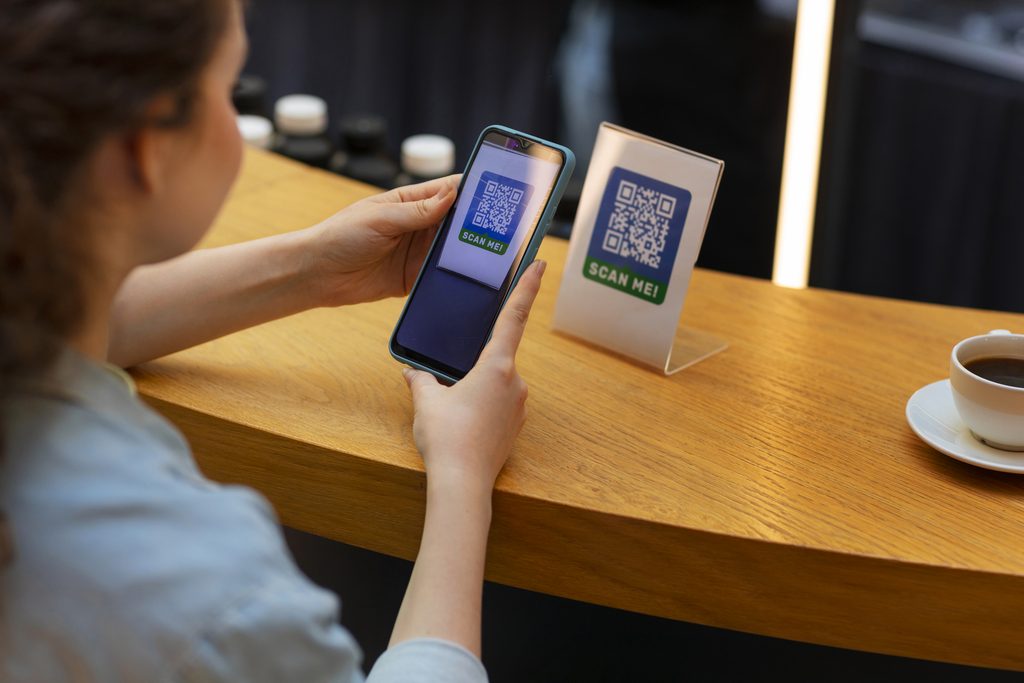
India’s Unified Payments Interface has transformed the country’s payment system by making digital transactions instant, convenient and effectively free. From street vendors to supermarkets, UPI has reduced dependence on cash and brought millions of small businesses into the formal financial system. The decision to introduce a Merchant Discount Rate on selected UPI merchant payments above ₹2,000 therefore marks an important change in India’s digital-payment policy.
From 15 October 2026, eligible person-to-merchant, or P2M, transactions exceeding ₹2,000 will attract an MDR of 0.4 per cent. The charge will be paid by the merchant, not by the customer, and will be capped at ₹300 per transaction. Certain categories—including fuel, railway tickets, insurance, telecom services, utilities and tax payments—will attract a flat ₹5 merchant charge. Small merchants receiving up to ₹1 lakh per month through UPI QR codes, as well as qualifying rural and semi-urban QR transactions, remain exempt. Person-to-person transfers continue to be free irrespective of their value, subject to the normal transaction limits imposed for risk management. (Ministry of Finance FAQ, Sept 15, 2026; Indian Express, Sept 17, 2026)
The consumer’s point of view
Formally, consumers will not pay the MDR. UPI applications and banks are also prohibited from imposing platform fees or hidden charges under this framework. Yet consumers may still bear part of its economic cost.
A merchant may offer a lower price for cash, remove an existing discount, increase the general selling price or insist that a customer use another payment method. Thus, “the merchant will pay” does not necessarily mean “the consumer will remain unaffected.”
There may also be greater confusion at payment counters. Customers will have to understand whether a QR code belongs to a small merchant, a regular merchant or an individual. Fear of an unexpected charge—even when no consumer charge exists—may reduce trust in the simplicity that has been UPI’s greatest strength.
At the same time, if MDR revenue produces safer systems, fewer payment failures, faster dispute resolution and better protection against fraud, consumers will receive an indirect benefit.
What if I send more than ₹2,000 to a friend?
If a person sends ₹5,000, ₹20,000 or any other amount to a genuine friend or relative through UPI, it is a person-to-person, or P2P, transaction. No MDR will be charged simply because the amount exceeds ₹2,000.
The crucial distinction is therefore not only the value of the transaction but also the nature of the recipient. A payment to a registered or classified merchant for purchasing goods or services is a P2M transaction. A genuine transfer to a friend is P2P.
However, merchants should not try to avoid MDR by routinely receiving commercial payments through personal UPI IDs. Merchants receiving more than ₹1 lakh through UPI for three consecutive months may be moved into the P2M category. Regular commercial receipts into a personal account may also create accounting, tax-compliance and transaction-monitoring complications.
The merchant’s point of view
For merchants, the policy creates an additional operating cost. A normal merchant receiving a ₹10,000 UPI payment would bear an MDR of ₹40. Although this amount may look small, it can be significant in businesses such as groceries, electronics distribution, garments and fuel retailing, where profit margins are often narrow.
The government has advised banks to ensure that the charge is not passed directly to consumers. Nevertheless, the economic burden of a charge does not necessarily remain with the person legally required to pay it. Merchants may indirectly recover the cost by raising prices, withdrawing cash discounts, reducing promotional offers or encouraging customers to use cash. Some may simply refuse UPI payments above ₹2,000.
The exemption for small merchants is welcome, but the ₹1 lakh monthly threshold may itself become a barrier to growth. A small seller nearing the threshold could hesitate to expand digital sales because crossing it changes the cost structure. Businesses just above the limit may also feel unfairly treated compared with those immediately below it. Retail organisations have already warned that the charge could encourage some merchants to return to cash, particularly for festival purchases above ₹2,000. (Reuters, Sept 16, 2026)
Will people divide payments into smaller parts?
The sharp ₹2,000 threshold creates an obvious behavioural incentive. Instead of making one payment of ₹4,000, a customer and merchant may agree to make two payments of ₹2,000 each. A ₹6,000 bill might similarly be divided into three transactions.
Such “payment splitting” could undermine the purpose of the policy. It may:
- reduce the MDR revenue intended to support the payment infrastructure;
- increase the number of transactions processed by the UPI system;
- create longer queues and inconvenience at shops;
- complicate merchants’ accounting and reconciliation;
- create confusion when one instalment succeeds and another fails;
- make refunds and consumer disputes more difficult; and
- encourage artificial transaction structuring merely to avoid a small charge.
The threshold therefore creates a classic “cliff effect”: a ₹2,000 transaction is free, while a ₹2,001 transaction suddenly attracts MDR on the applicable basis. A graduated structure, or a charge only on the portion exceeding ₹2,000, would create less incentive to split payments.
The banks’ point of view
UPI may be free for users, but it is not costless to operate. Banks and payment companies must invest in servers, cybersecurity, fraud detection, customer support, settlement systems and dispute resolution. As UPI volumes increase, these costs also rise.
Under the new framework, MDR revenue will be distributed among the participants facilitating a transaction, with the remitter’s bank receiving the largest share. The policy can therefore provide banks and payment firms with a more predictable revenue stream and reduce their dependence on government incentives. It may also attract more fintech companies and encourage investment in service quality and security. (Reuters, Sept 16, 20266)
However, banks should not treat MDR merely as a new source of income. The additional revenue must produce measurable improvements—fewer failed transactions, better fraud compensation, quicker grievance redressal and greater system reliability. Without visible improvement, the public may reasonably view the charge as payment for a service that banks were already expected to provide.
The government’s point of view
The government’s argument is that a payment system processing transactions of enormous volume and value cannot permanently depend on subsidies and zero pricing. MDR can help make the UPI ecosystem financially sustainable while allowing public funds to be directed towards small merchants, rural adoption and financial inclusion. Five per cent of MDR collections is proposed to be allocated to a dedicated fund for promoting UPI adoption among small merchants.
The government also has an interest in maintaining a digital trail of economic activity. Digital payments can promote formalisation, improve tax compliance, reduce cash-handling costs and increase financial transparency.
The danger, however, is that poorly designed charges may reverse some of these gains. If merchants shift high-value transactions back to cash, the government could lose part of the transparency and formalisation achieved through UPI. The administrative cost of monitoring merchant classification and preventing artificial payment splitting must also be considered.
Is the policy justified?
The objective of creating a financially sustainable UPI ecosystem is reasonable. A system of this scale requires continuous investment, and expecting banks and technology providers to provide every service indefinitely without a revenue model may not be realistic.
Nevertheless, the design of the policy deserves criticism.
First, the ₹2,000 cut-off is too abrupt and creates a strong incentive to split payments. Second, a uniform rate does not sufficiently recognise the wide differences in merchants’ profit margins. Third, prohibiting merchants from passing on the charge may be difficult to enforce because the cost can be transferred indirectly through prices. Fourth, the ₹1 lakh exemption threshold could penalise growing micro-enterprises. Finally, introducing the charge shortly before the festival-shopping period may disrupt both merchants and consumers.
A better approach would be to introduce a lower, graduated MDR based on merchant size and sector, charge only on the portion of a payment exceeding ₹2,000, and provide a higher or gradually declining exemption threshold for small businesses. The government should also require transparent reporting on how MDR revenue is used and whether it improves cybersecurity, reliability and grievance redressal.
UPI’s success came not only from technology but also from its simplicity and public trust. Financial sustainability is necessary, but it should not be achieved in a manner that encourages cash payments, fragmented transactions or mistrust. The policy should therefore be reviewed on the basis of evidence after implementation and modified promptly if digital adoption begins to weaken.
Stay connected with us to explore endless opportunities at Praxis Business School!
Visit our website at https://praxis.ac.in/ to learn more about our programs, admissions, and campus life. For any queries, feel free to reach out to us at https://praxis.ac.in/contact-us.
Follow us for the latest updates, insights, and success stories.
We look forward to connecting with you!